
Impact Crusher Blow
Bars, Martensitic, HighChrome & Ceramic Inserts
Impact crusher blow bars are essential wear parts for HSI crushers, designed for high impact
resistance and extended service life. Available in martensitic steel, high chrome and ceramic
insert composites for different crushing conditions.
What HSI Blow Bars Do and Why Material Matters
Blow bars are the key wear parts in HSI crushers, responsible for impacting and breaking material at high speed. Their performance directly affects crushing efficiency, product quality and overall wear life.
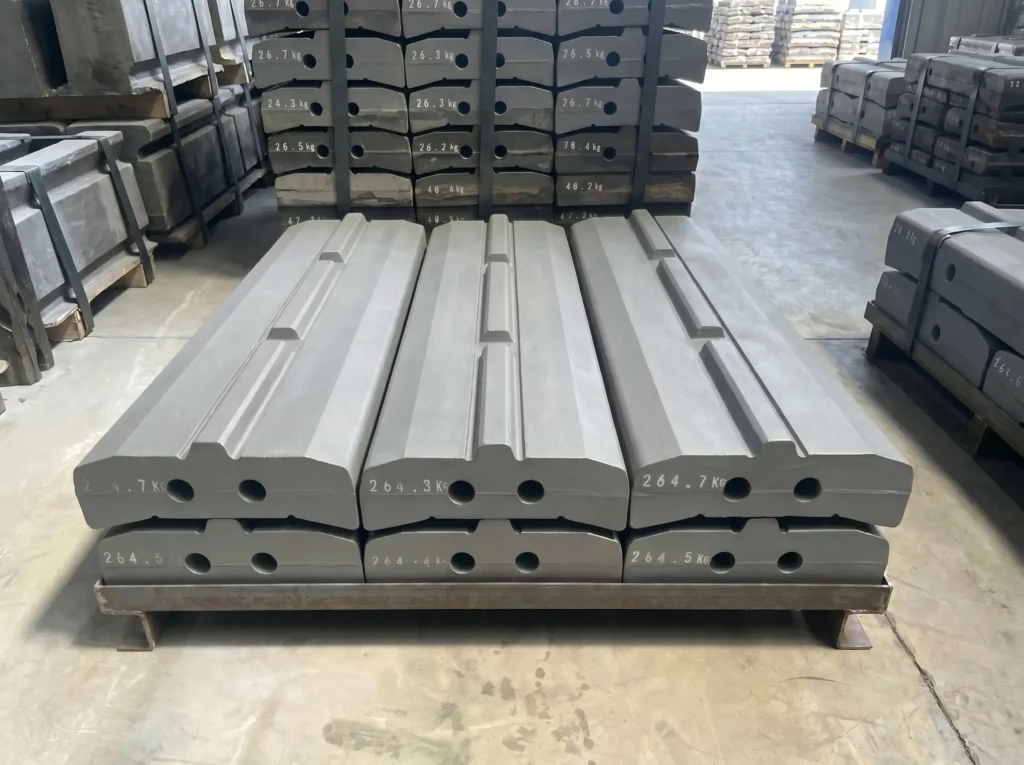
Impact Crusher Blow Bar Gallery
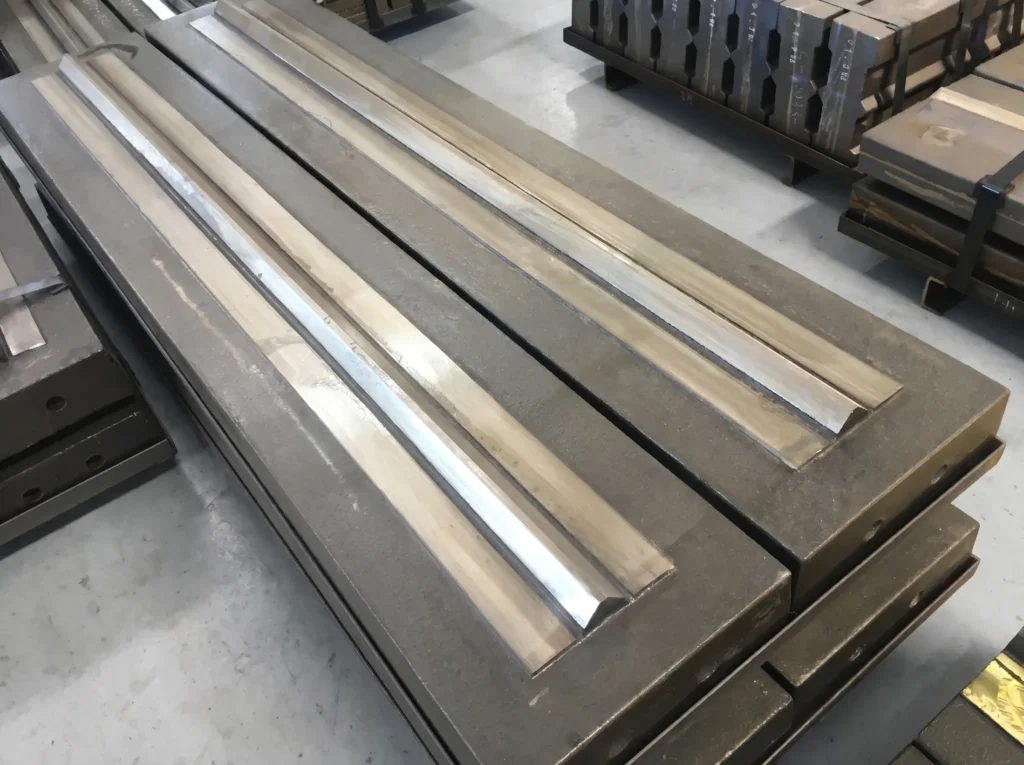
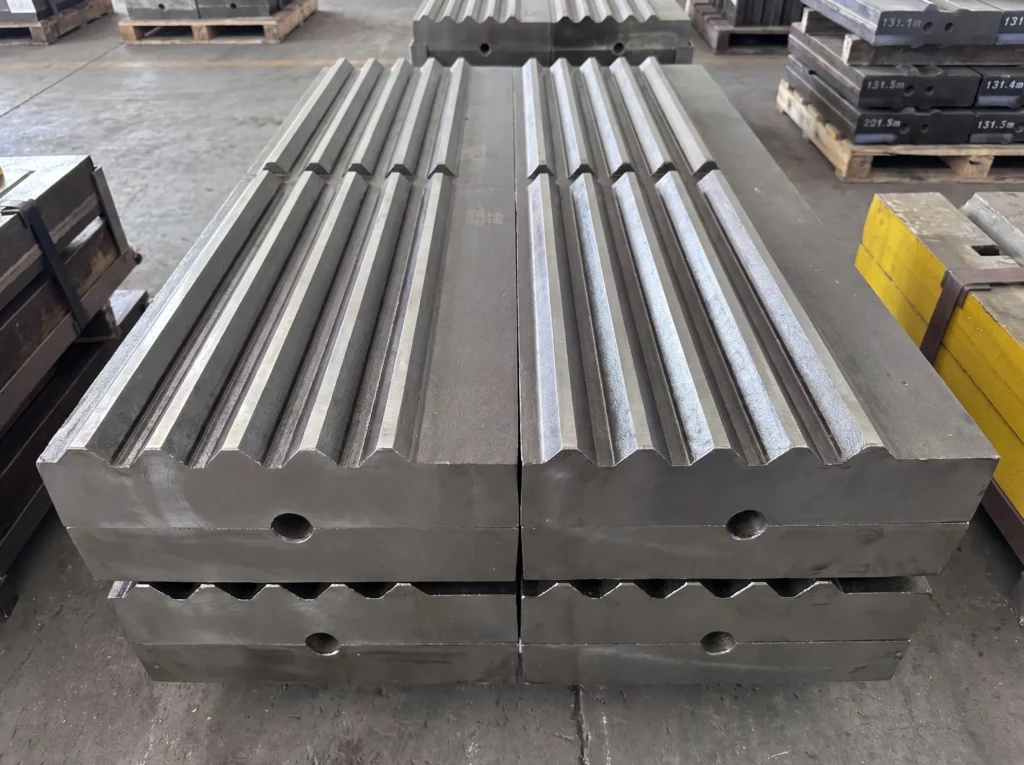
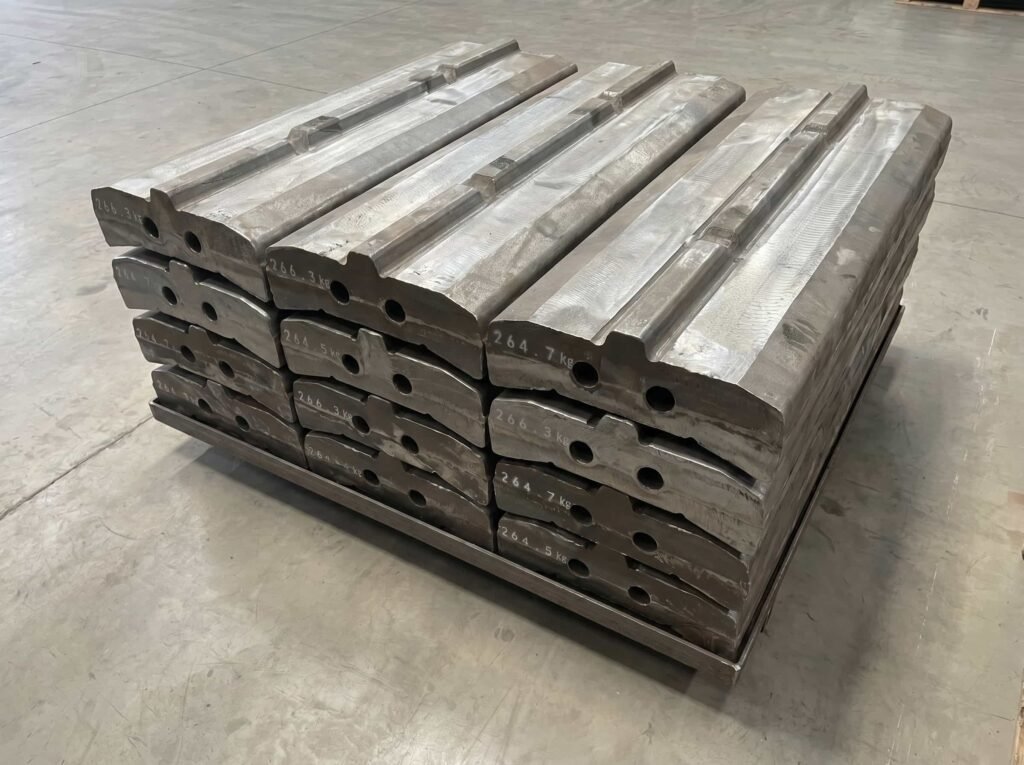
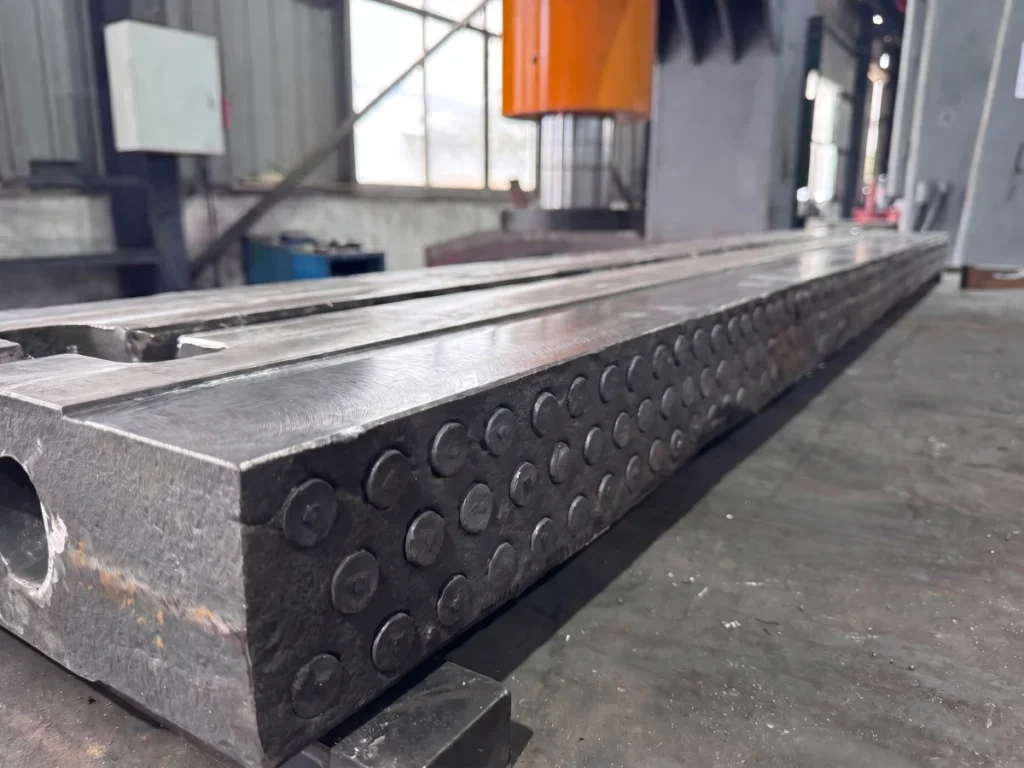
Explore our range of impact crusher blow bars manufactured for high-performance crushing applications. Our blow bars are available in high chrome, martensitic steel, and ceramic insert composites, designed to deliver superior wear resistance and longer service life. Suitable for mining, aggregates, and recycling industries, these wear parts ensure optimal crushing efficiency and reduced downtime.
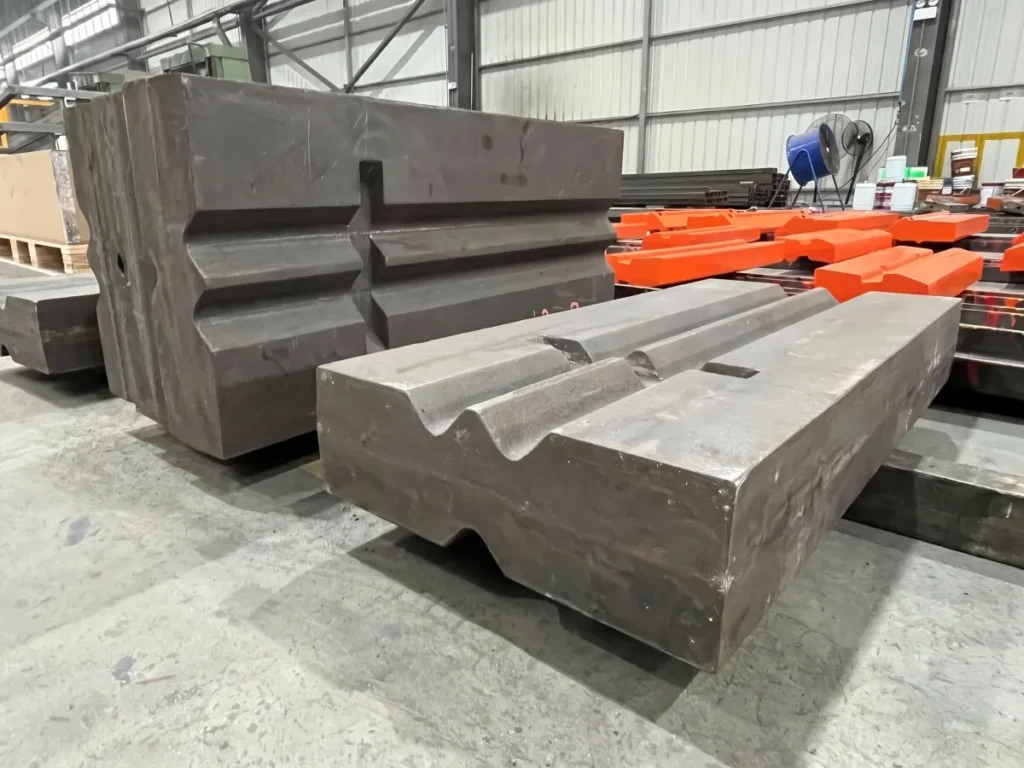
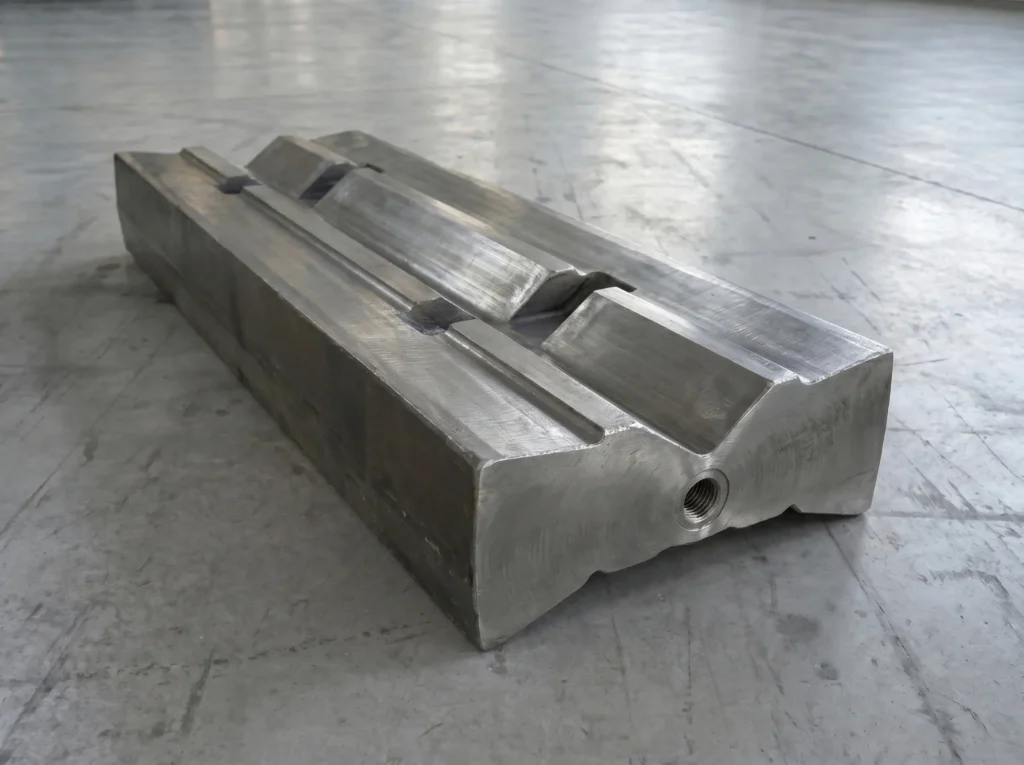
Impact Crusher Blow Bar Materials
Manganese Steel Blow Bars (Mn18Cr2 & TiC Reinforced)
Mn18Cr2 manganese steel blow bars are ideal for high-impact crushing applications, especially where large feed materials or tramp metal may enter the crusher. The material work-hardens during operation, combining a tough core with increasing surface hardness.
Upgrade Option: TiC Reinforced Blow Bars
TiC inserts provide localized hardness up to 3200 HV along the wear surface, significantly improving edge wear resistance while maintaining the impact strength of manganese steel.
High Chrome Blow Bars (High Chromium & Ceramic Inserts)
Mn18Cr2 manganese steel blow bars are designed for high-impact crushing, especially where large feed or tramp metal may enter the crusher. The material work-hardens during operation, combining a tough core with increasing surface hardness.For more abrasive conditions, TiC reinforced blow bars extend service life while maintaining high impact strength.
Upgrade Option: High Chrome + Ceramic Insert
Ceramic inserts significantly improve wear resistance, delivering 2–3× longer service life compared to standard high chrome blow bars. Ideal for highly abrasive applications such as manufactured sand, asphalt recycling and fine crushing.
Martensitic Steel Blow Bars (Martensitic & Ceramic Reinforced)
Martensitic steel blow bars balance impact and wear resistance for crushing applications. With hardness of 48–54 HRC, they offer higher wear resistance than manganese steel and better toughness than high chrome. They perform well in moderate-impact and abrasive conditions. Ceramic reinforced options extend wear life while maintaining impact strength.
Upgrade Option: Ceramic Reinforced Blow Bars
Ceramic inserts improve wear resistance and extend service life while maintaining good impact strength. Ideal for applications combining impact and abrasion.
How to Choose Blow Bar Material by Application
Choosing the right impact crusher blow bar material depends on impact level, feed size and abrasiveness. Use the guide below to quickly match materials to your crushing conditions.
| Application Condition | Recommended Material | Why Choose It ? |
|---|---|---|
| High impact, large feed, tramp metal | Mn18Cr2 Manganese | Maximum impact resistance with work-hardening capability |
| High impact + high abrasion | Mn18Cr2 + TiC | Improved wear resistance while maintaining high impact strength |
| Moderate impact, mixed materials | Martensitic Steel | Balanced wear resistance and impact toughness |
| Abrasive + some impact | Martensitic + Ceramic | Extended wear life with stable performance |
| Low impact, high abrasion (clean feed) | High Chrome | Maximum wear resistance for consistent materials |
| Ultra-abrasive, controlled feed | High Chrome + Ceramic | Extended service life in extreme wear conditions |
Note: Not sure which material fits your application? Contact our engineers for a professional recommendation.
Blow Bar Rotation & Maintenance Tips
Proper blow bar rotation and maintenance are essential for maintaining rotor balance and maximizing wear life. Follow these basic guidelines to improve performance and prevent unexpected failures.
Wear Management
25–30%
worn
Rotate 180°
Rotate blow bars 180° (flip end-to-end) to expose a new wear surface and extend service life.
50–60%
worn
Move Position
Move blow bars from leading to trailing position to reduce impact load and balance wear.
70–80%
worn
Replace Blow Bars
Replace blow bars to prevent rotor imbalance and excessive vibration.
Installation
Blow Bar Weight Difference
Keep the weight difference between opposite blow bars minimal to maintain proper rotor balance.
Rotor Balance
Ensure proper rotor balance during installation to reduce vibration and minimize bearing wear.
Ceramic / TiC Blow Bars
Use stricter balance control. Inserts are more sensitive to imbalance.
Inspection
Routine Inspection
Check regularly for cracks or excessive wear to prevent unexpected equipment failures.
Before Rotation
Do not reuse cracked blow bars. Also inspect mounting holes and fasteners for wear or elongation.
Mounting Check
Check mounting holes and fasteners for wear or elongation.
Before Rotation – Important Check
⚠ Inspect blow bars for cracks before rotation or flipping
⚠ Do not reuse cracked blow bars to avoid unexpected failure
⚠ Check mounting holes and fasteners for wear or elongation
Compatible Impact Crusher Models for Blow Bars
MINEVANT blow bars are manufactured to the dimensional tolerances of major HSI impact crusher models. Send your crusher model and rotor drawing for dimensional confirmation before ordering.
| OEM Brand | Models |
|---|---|
| Metso | NP-LT1007, NP-LT1110, NP13, NP15, NP1520, NP1620 |
| Hazemag | APK30, APK40, APK50, APK60, APK105, APK1006, APK1013, AP-PM1822, AP-PM2225, HAZ790, HAZ853, HPI2025 |
| Sandvik | CI124, CI224, QI340, QI341, QI353, QI441 |
| Kleemann | MR100Z, MR110Z, MR122Z, MR130Z, MR150Z, SHB10, SHB12, SHB13, SHB14 |
| Terex Finlay | I-100, I-110, I-120, I-130, I-140, IC110 |
| Terex Cedarapids | 5048 HIS, 5064 HIS |
| Terex Evoquip | Cobra 230, Cobra 260, Cobra 290 |
| McCloskey | I34, I44, I4C, I54 |
| Rubblemaster | RM60, RM70, RM80, RM90, RM100, RM120 |
| Keestrack | R3, R5, R6 KP, R6 KT, Destroyer 1112, Destroyer 1113 |
| KPI-JCI (ASTEC) | FT4240, FT4250, FT5260 |
| SBM | 1311, 1313, REMAX 200, REMAX 300, REMAX 400 |
| Rockster | R700, R900 |
| Hartl | 1060, 1270, 1310 |
| Eagle | 500, 1000, 1200, 1400, 1600 |
| Lippmann | 4248, 5165 |
| Striker | 907, 1112, 1312, 1315 |
| Tesab | RK1012, RK623, RK624 |
| IROCK | S3151-13-4, S3151-13-5 |
| Inertia | 4048, 5066 |
| Portafill | 7000-IC |
Can’t find your crusher model?
- Send us your crusher model or drawing — our engineers will confirm compatibility and provide a solution within 24 hours.
- Custom blow bars can be manufactured within 3–5 weeks.
All OEM names and part numbers are for reference only and do not imply any affiliation.
Get a fast quotation for your blow bars.
Blow Bar FAQs
Find answers to common questions about impact crusher blow bars, materials, wear life, and replacement.
Which blow bar material lasts the longest?
The longest-lasting blow bar material depends on the application. For highly abrasive conditions, high chrome and ceramic reinforced blow bars provide the best wear life. For high-impact applications, manganese steel offers longer service life due to its work-hardening properties.
Can high chrome blow bars be used in recycling applications?
Yes, high chrome blow bars are widely used in recycling applications such as concrete and asphalt crushing. However, if tramp metal or large feed materials are present, manganese steel or martensitic blow bars are recommended for better impact resistance.
Do ceramic blow bars break easily?
Ceramic reinforced blow bars do not break easily when used in the correct conditions. They offer superior wear resistance for abrasive materials, but are not recommended for primary crushing or applications with heavy impact or tramp metal.
How often should impact crusher blow bars be replaced?
Blow bar replacement intervals depend on material type, feed size and operating conditions. In most applications, blow bars are rotated several times before replacement, and regular inspection is essential to prevent excessive wear and rotor damage.
What information is required to quote blow bars?
To provide an accurate quotation, please supply the crusher brand and model, blow bar part number or dimensions, material preference and application details. Drawings or photos are recommended to ensure correct fit and optimal performance.
Which crusher brands are compatible with MINEVANT blow bars?
MINEVANT blow bars are compatible with major impact crusher brands such as Metso, Sandvik, Kleemann, Terex, McCloskey and others. All parts are manufactured to OEM specifications to ensure proper fit, consistent performance and extended wear life.
What is the difference between manganese and high chrome blow bars?
Choosing the right blow bar depends on impact level, material abrasiveness and feed size. High impact requires manganese steel, while abrasive conditions require high chrome or ceramic reinforced blow bars for longer wear life.
How do I choose the right blow bar material?
Choosing the right blow bar depends on impact level, material abrasiveness and feed size. High impact requires manganese steel, while abrasive conditions require high chrome or ceramic reinforced blow bars for longer wear life.