
Crusher Hammers for Cement & Limestone Crushing Manganese Steel, TIC Inserts & Alloy Options
Durable crusher hammers designed for hammer crushers in cement plants, quarries, and limestone applications. Available in Mn18, Mn22 and TIC reinforced options for extended wear life.
What Crusher Hammers Do and Why Material Matters
Crusher hammers are critical wear parts used in primary and secondary hammer crushers. Mounted on the rotor, they deliver high-impact crushing force to break limestone, clinker, coal, and other bulk materials in cement and aggregate applications.
These hammers must withstand repeated impact, heavy loads, and abrasive wear under demanding crushing conditions. The right hammer design and material selection directly affect crusher efficiency, product consistency, downtime, and overall wear life.
Common material options include high manganese steel, TIC reinforced manganese hammers, alloy steel, and ceramic insert solutions for different impact and abrasion levels. Selecting the proper hammer material helps maximize wear life and maintain stable crusher performance.
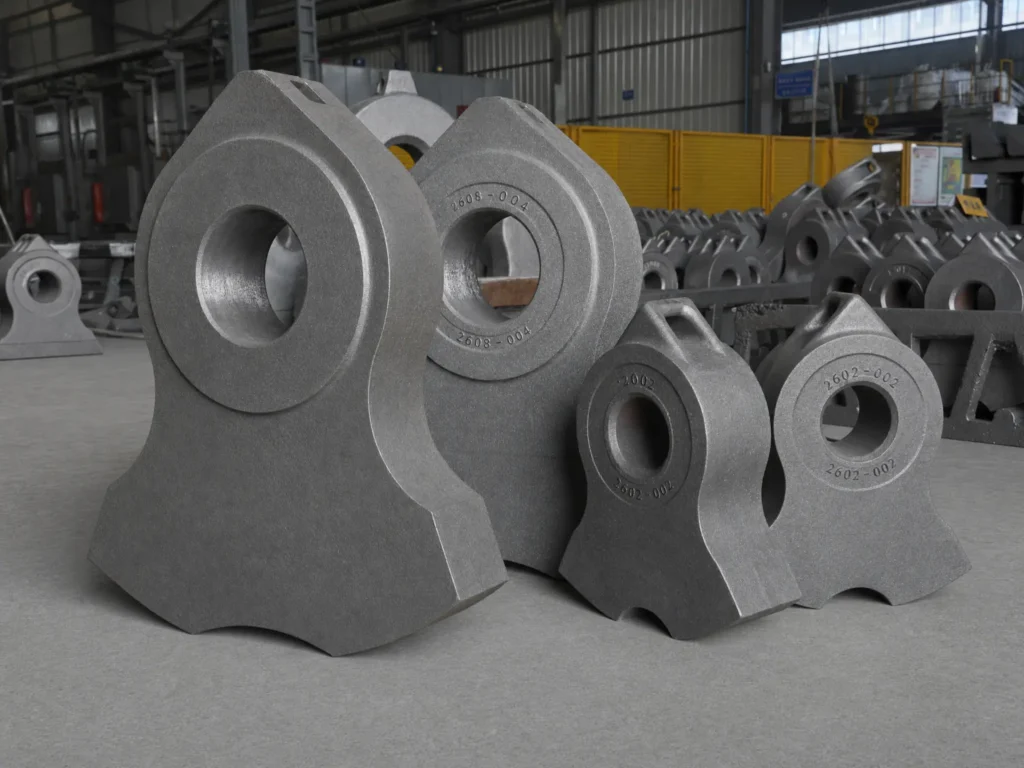
Crusher Hammers Gallery
Explore our range of crusher hammers designed for primary and secondary hammer crushers used in cement plants, limestone crushing, quarrying, and aggregate applications. MINEVANT manufactures high manganese steel hammers, TIC reinforced manganese hammers, alloy steel hammers, and ceramic insert solutions engineered for high impact resistance, extended wear life, and stable crushing performance under demanding operating conditions.
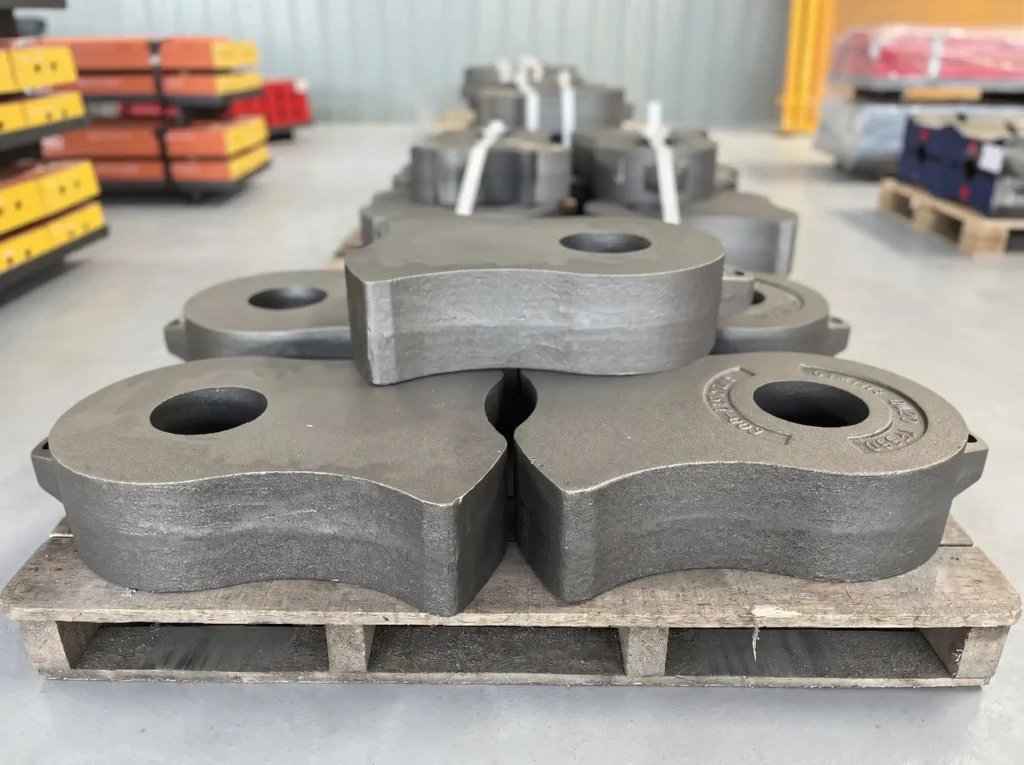
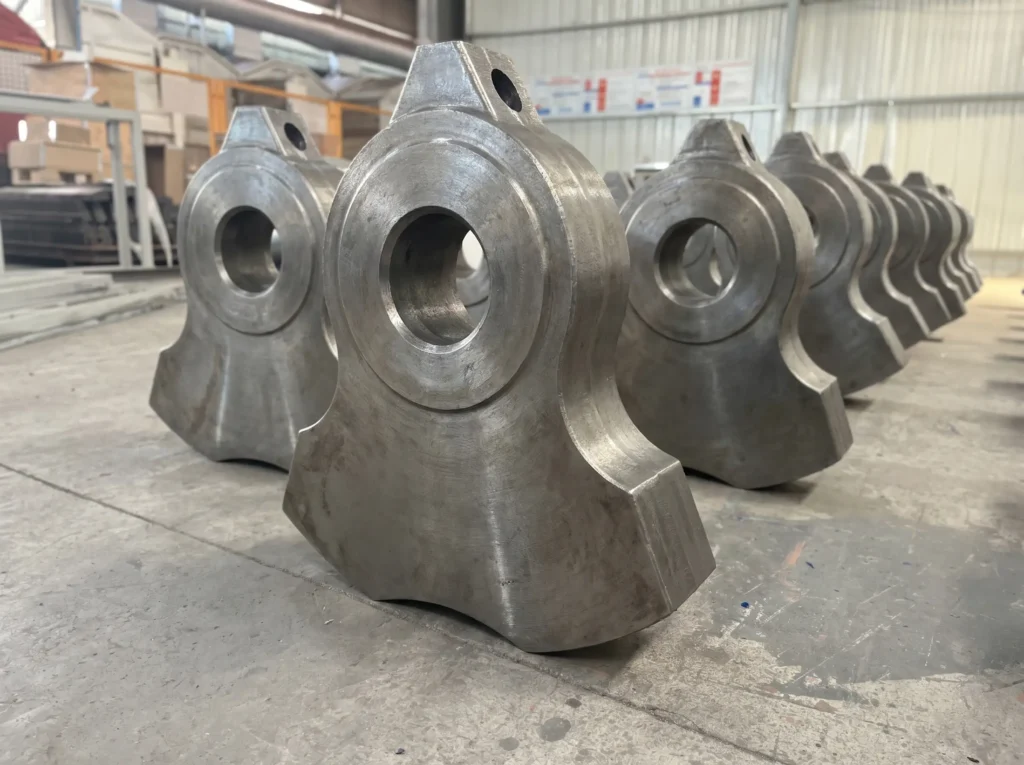
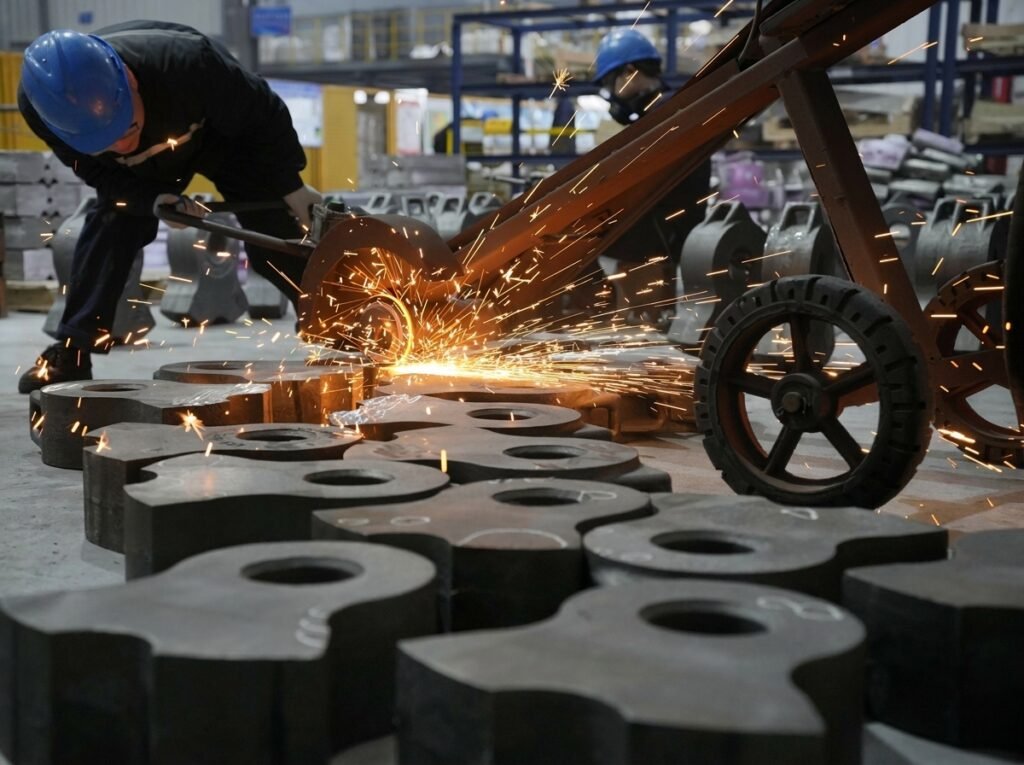
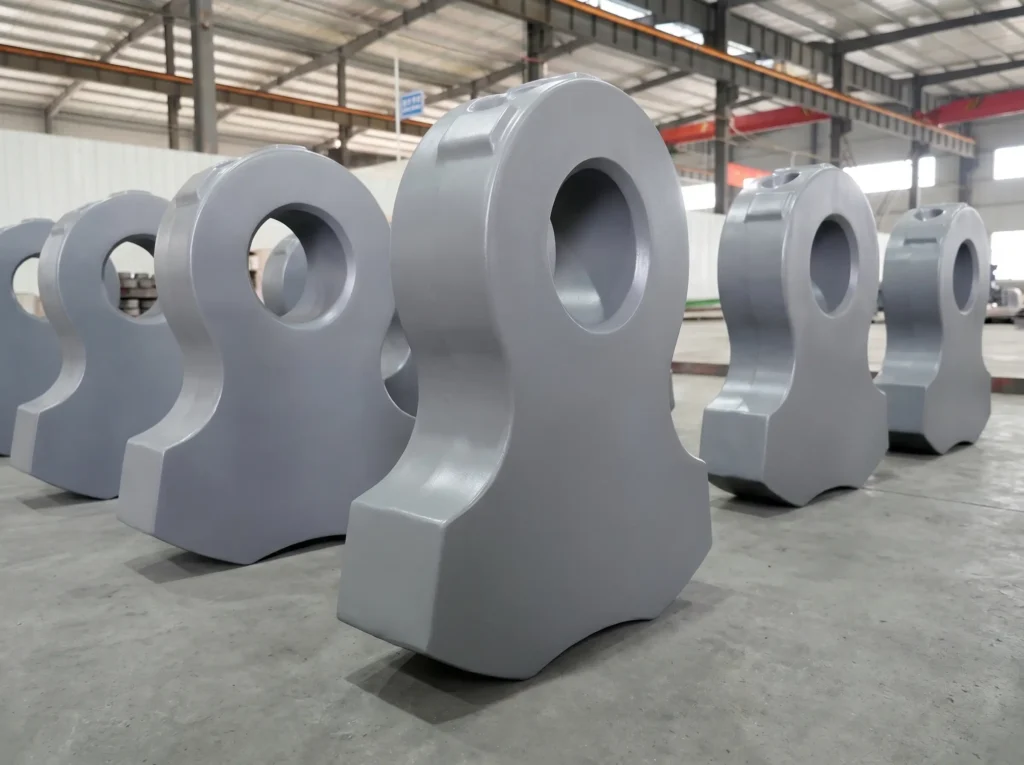
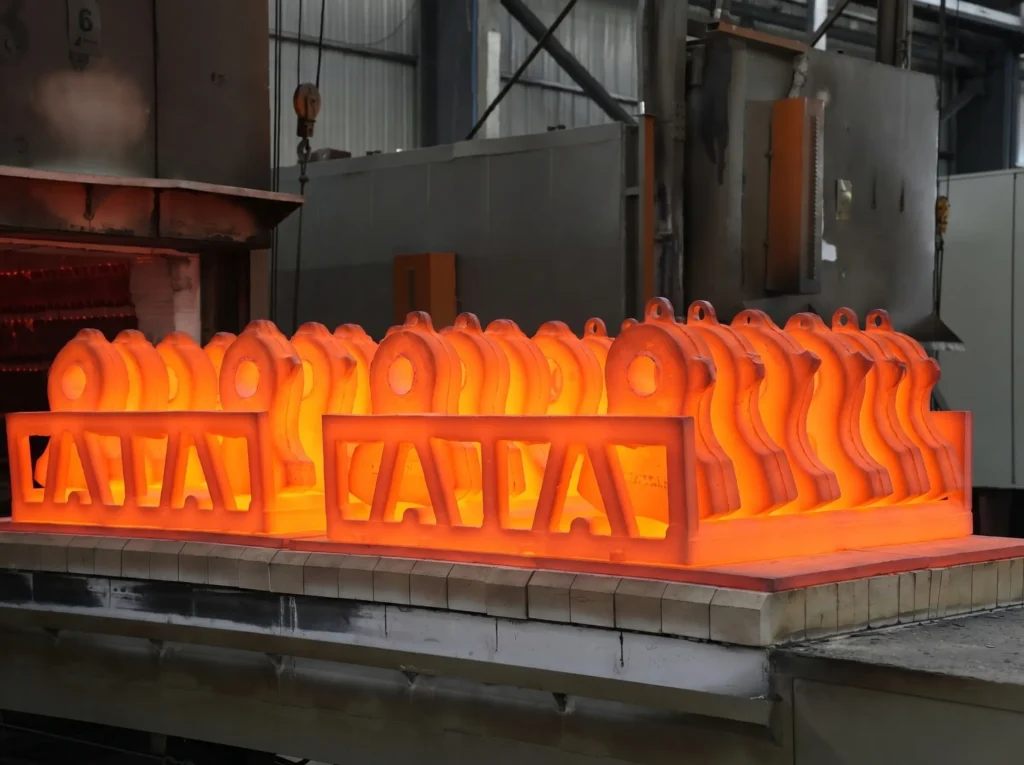
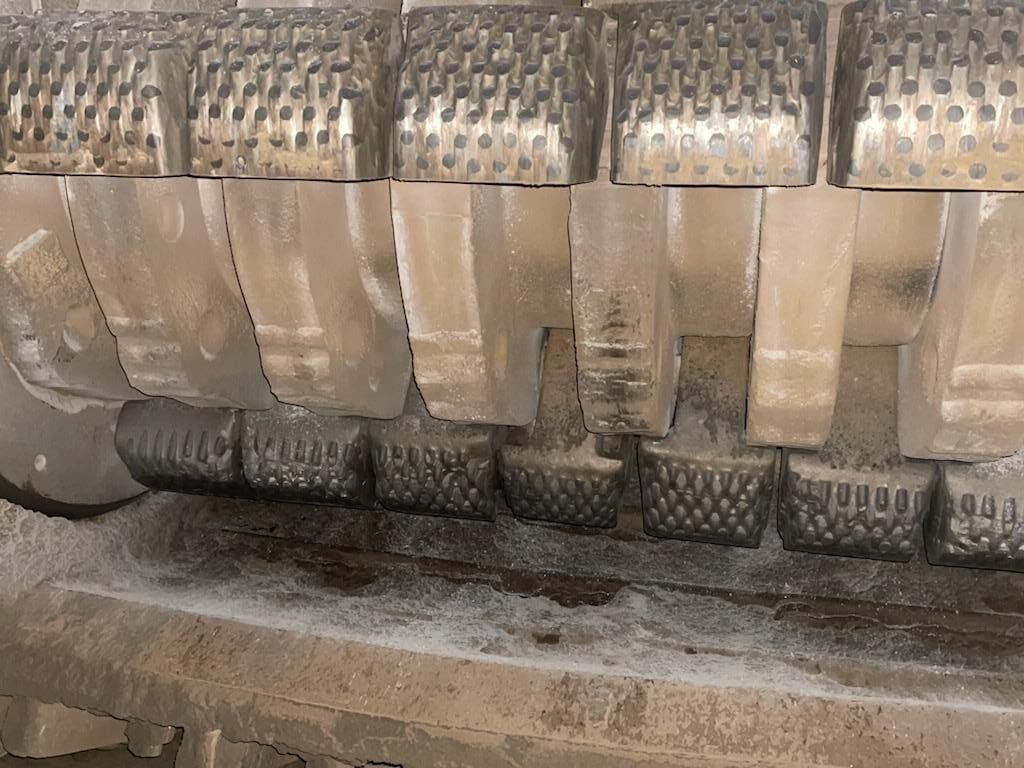
Industrial Crusher Hammers material
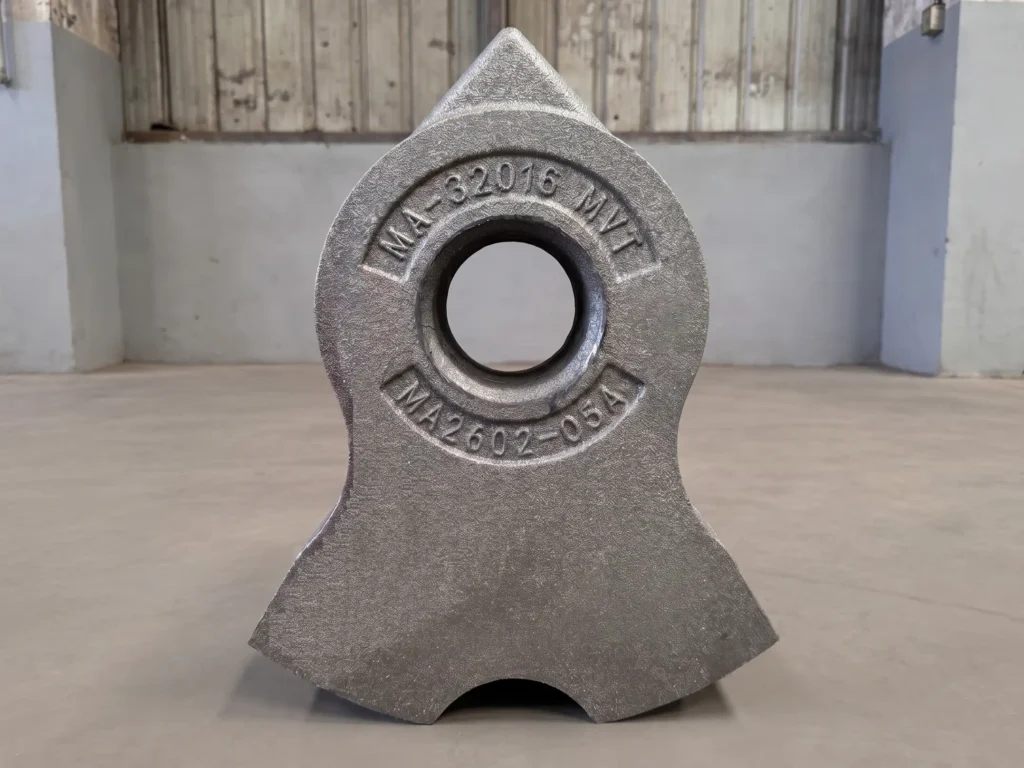
High Manganese Crusher Hammers(Mn18 / Mn22)
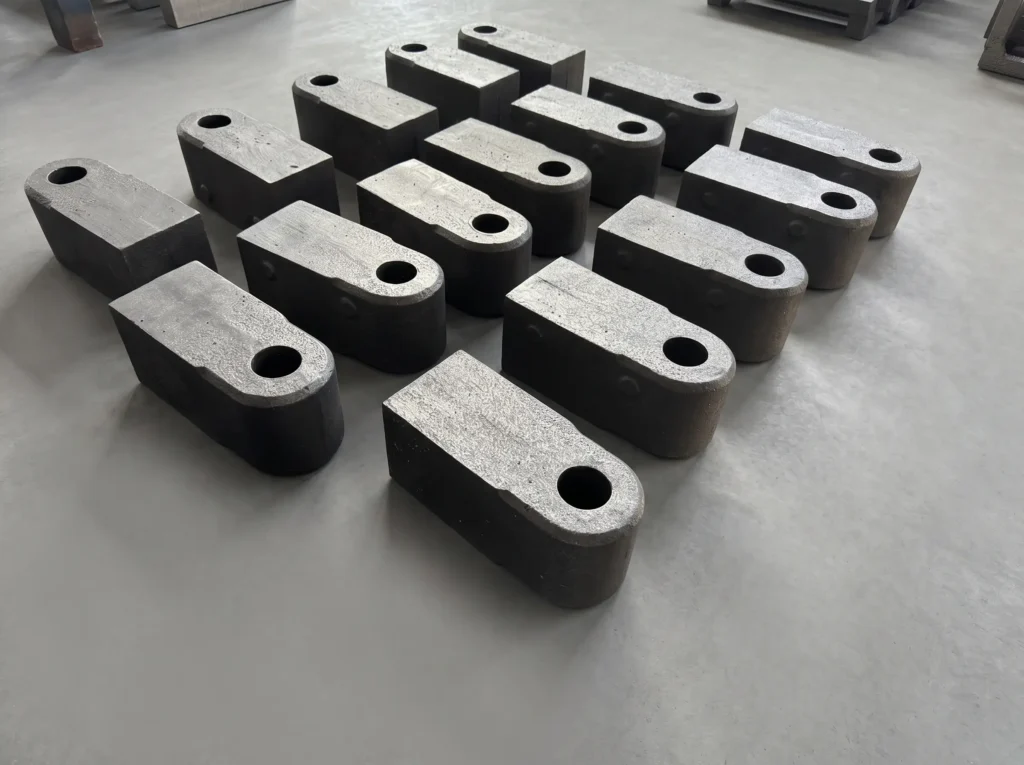
High manganese crusher hammers are widely used in primary and secondary crushing applications where strong impact resistance is required. The material work-hardens during operation, providing a tough core with increasing surface hardness for extended service life.
Upgrade Option: TiC Reinforced Crusher Hammers
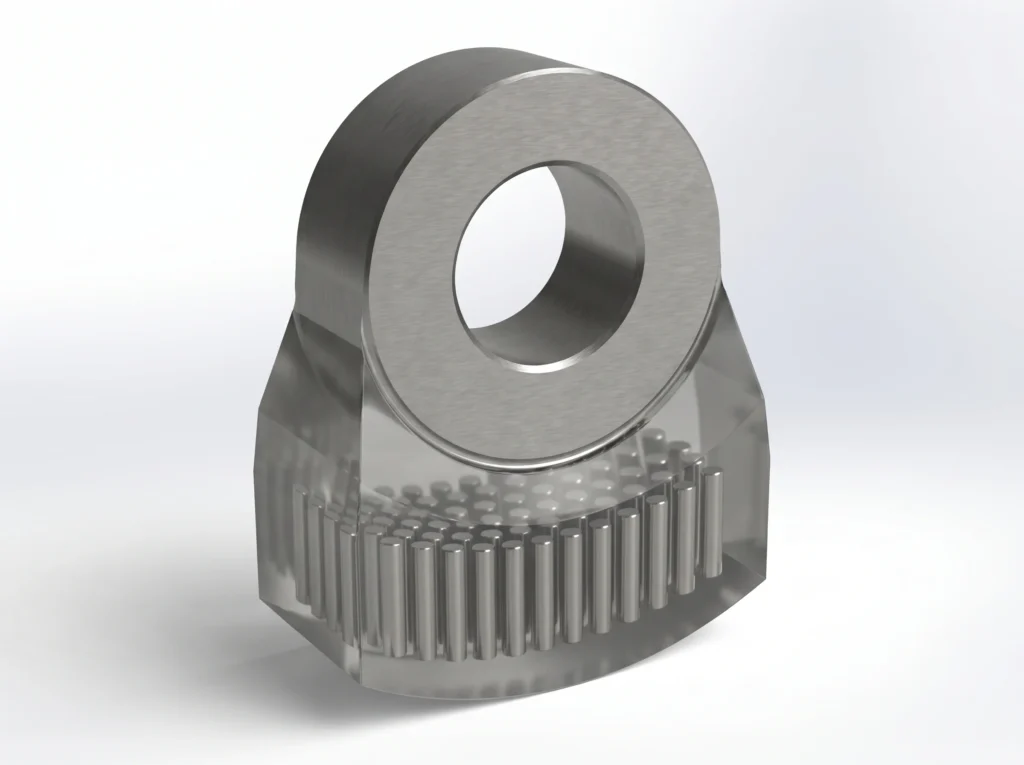
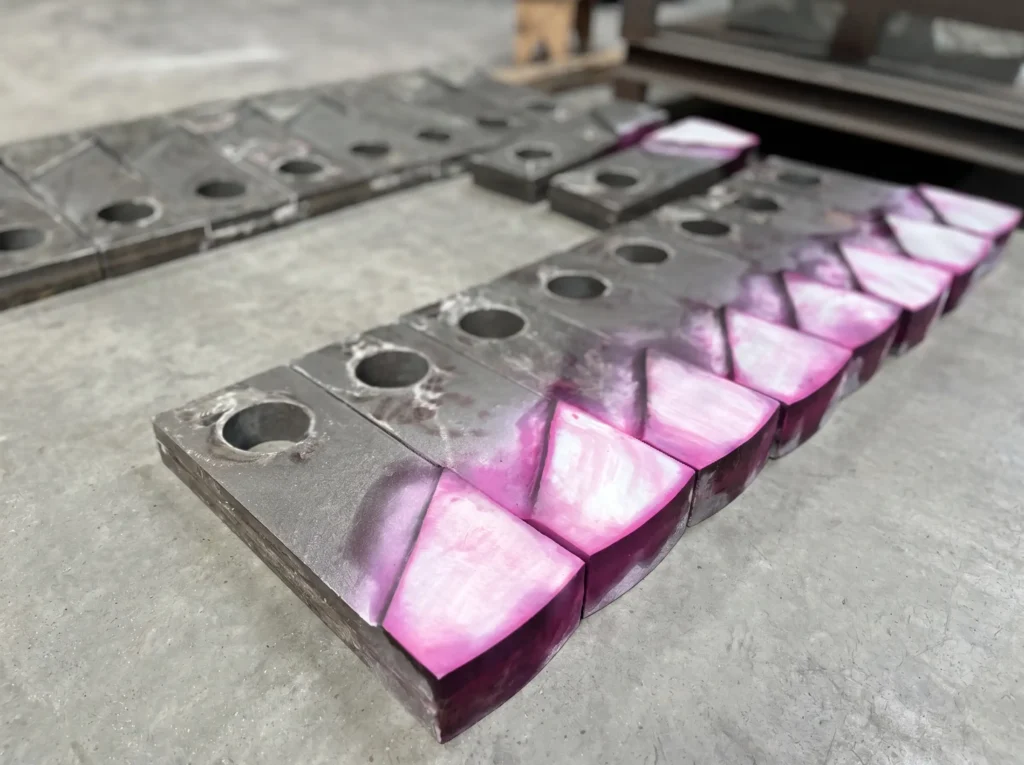
TiC inserts provide localized ultra-hard wear zones along the hammer surface, significantly improving wear resistance in high-abrasion crushing applications while maintaining the toughness of manganese steel.
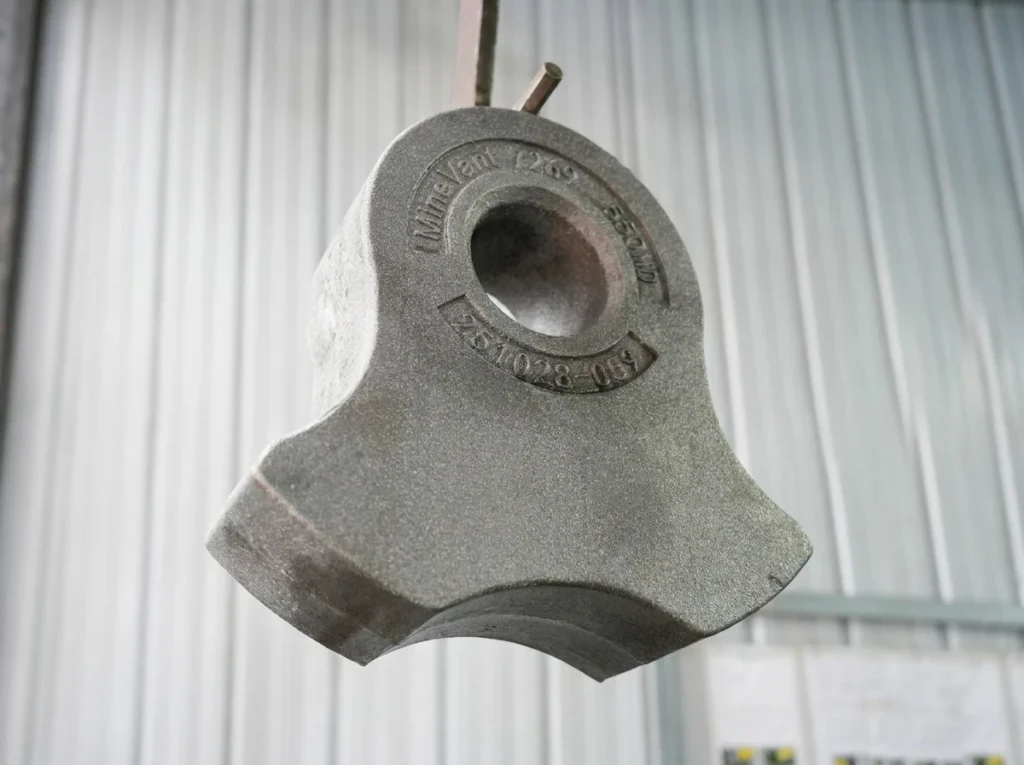
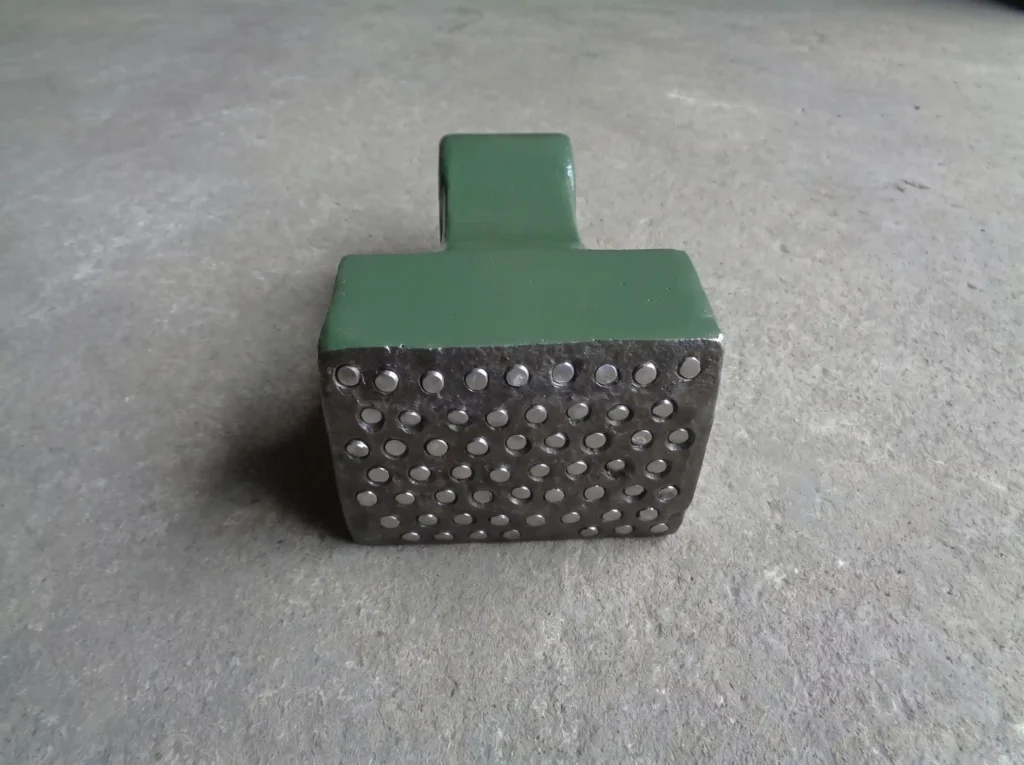
TiC Inserts Manganese Crusher Hammers
TiC reinforced manganese crusher hammers are designed for heavy-impact crushing applications where both wear resistance and impact toughness are critical. By combining high manganese steel with localized titanium carbide reinforcement, the hammer surface achieves significantly improved wear resistance while maintaining the strong impact performance and work-hardening characteristics of manganese steel.
This design helps extend service life in demanding limestone, aggregate and abrasive crushing applications without increasing the risk of breakage.
Advanced Wear Solution: TiC Reinforcement Technology
TiC reinforcement creates localized ultra-hard wear zones on the hammer surface, significantly improving abrasion resistance while preserving the impact strength and toughness required for heavy hammer crusher applications.
Alloy Steel Crusher Hammers
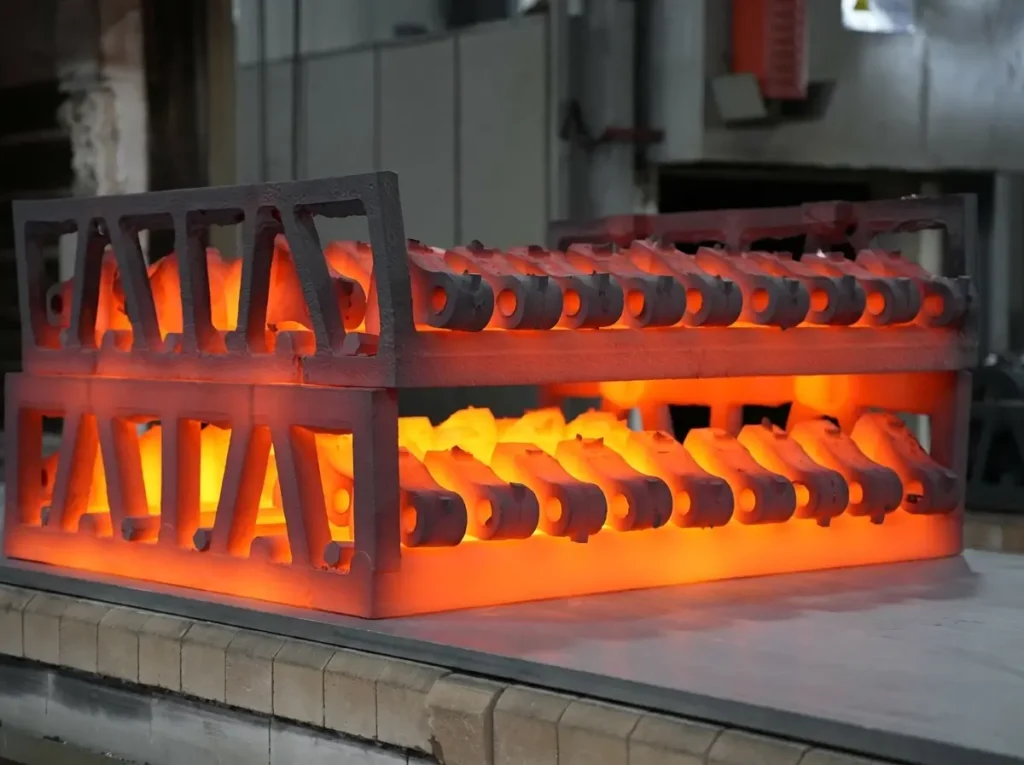
Alloy steel crusher hammers are designed for clinker crushing applications where high temperature, abrasive materials, and corrosive environments require enhanced heat resistance and structural stability. These hammers provide reliable performance in cement plant operating conditions.
Future Material Options: Bi-metal & Ceramic Reinforced Hammers
Additional material solutions including bi-metal and ceramic reinforced hammer designs are under continuous development for extreme clinker and high-abrasion applications.
How to Choose Crusher Hammer Materials by Application
Choosing the right crusher hammer material depends on impact level, abrasiveness, feed size and operating conditions. The guide below helps match hammer materials to different cement, limestone and aggregate crushing applications.
| Application Condition | Recommended Material | Why Choose It ? |
|---|---|---|
| High impact, large feed, primary crushing | Mn18Cr2 / Mn22Cr2 Manganese Steel | Excellent impact resistance with work-hardening capability |
| High impact + high abrasion | Mn18Cr2 + TiC | Improved wear resistance while maintaining impact toughness |
| Limestone and aggregate crushing | High Manganese Steel | Reliable performance for heavy hammer crusher applications |
| Abrasive materials with extended wear requirements | TiC Reinforced Manganese | Longer service life and reduced hammer wear rate |
| Clinker crushing in cement plants | Alloy Steel Crusher Hammers | Better heat resistance and structural stability |
| High-temperature & corrosive operating conditions | Alloy Steel | Stable performance in demanding cement plant environments |
Note: Not sure which crusher hammer material fits your application? Contact our engineers for a professional recommendation based on your crushing conditions and wear requirements.
Crusher Hammer Maintenance & Inspection Tips
Proper hammer inspection and maintenance are essential for maximizing service life, maintaining stable crushing performance and reducing unexpected downtime. Follow these guidelines to improve hammer crusher operating reliability.
Wear Management
25–30%
worn
Monitor Wear Pattern
Inspect hammer wear regularly to ensure even wear and stable crushing performance.
50–60%
worn
Check Hammer Position
Replace or reposition excessively worn hammers to reduce uneven impact load and vibration.
70–80%
worn
Replace Hammers
Replace worn hammers before excessive wear affects crusher efficiency or causes failures.
Installation
Mounting Check
Ensure hammer pins, fasteners and mounting holes are properly installed before operation.
Stable Feeding
Maintain stable feed size and consistent material distribution to reduce uneven hammer wear.
Heavy-Duty Applications
For high-impact or abrasive applications, use upgraded hammer materials such as TiC reinforced manganese steel.
Inspection
Routine Inspection
Inspect crusher hammers regularly for excessive wear, cracking or abnormal wear patterns.
Before Replacement
Check hammer pins, mounting holes and surrounding wear parts before installing new hammers.
Reduce Downtime
Scheduled inspections help reduce unexpected shutdowns and improve operating reliability.
Before Hammer Replacement – Important Check
⚠ Inspect hammer pins and mounting holes for excessive wear
⚠ Replace cracked or heavily worn hammers immediately
⚠ Check surrounding wear parts before installing new hammers
⚠ Ensure stable mounting to reduce vibration and uneven wear
OEM COMPATIBILITY
Compatible Impact Crusher Models for Blow Bars
MINEVANT blow bars are manufactured to the dimensional tolerances of major HSI impact crusher models. Send your crusher model and rotor drawing for dimensional confirmation before ordering.
| OEM Brand | Models |
|---|---|
| Metso | NP-LT1007, NP-LT1110, NP13, NP15, NP1520, NP1620 |
| Hazemag | APK30, APK40, APK50, APK60, APK105, APK1006, APK1013, AP-PM1822, AP-PM2225, HAZ790, HAZ853, HPI2025 |
| Sandvik | CI124, CI224, QI340, QI341, QI353, QI441 |
| Kleemann | MR100Z, MR110Z, MR122Z, MR130Z, MR150Z, SHB10, SHB12, SHB13, SHB14 |
| Terex Finlay | I-100, I-110, I-120, I-130, I-140, IC110 |
| Terex Cedarapids | 5048 HIS, 5064 HIS |
| Terex Evoquip | Cobra 230, Cobra 260, Cobra 290 |
| McCloskey | I34, I44, I4C, I54 |
| Rubblemaster | RM60, RM70, RM80, RM90, RM100, RM120 |
| Keestrack | R3, R5, R6 KP, R6 KT, Destroyer 1112, Destroyer 1113 |
| KPI-JCI (ASTEC) | FT4240, FT4250, FT5260 |
| SBM | 1311, 1313, REMAX 200, REMAX 300, REMAX 400 |
| Rockster | R700, R900 |
| Hartl | 1060, 1270, 1310 |
| Eagle | 500, 1000, 1200, 1400, 1600 |
| Lippmann | 4248, 5165 |
| Striker | 907, 1112, 1312, 1315 |
| Tesab | RK1012, RK623, RK624 |
| IROCK | S3151-13-4, S3151-13-5 |
| Inertia | 4048, 5066 |
| Portafill | 7000-IC |
Model not listed? Contact MINEVANT with your crusher model, part number or blow bar dimensions. Our engineering team can manufacture custom blow bars according to drawings within 3–5 weeks.
All manufacturer names, part numbers and model descriptions are used for reference purposes only and do not imply any affiliation with the original equipment manufacturers.
Crusher Hammer FAQs
Find answers to common questions about crusher hammer materials, wear life, maintenance and cement crushing applications.
Which crusher hammer material lasts the longest?
Crusher hammer service life depends on the crushing application, feed material and operating conditions.
High manganese steel hammers provide excellent impact resistance for limestone and aggregate crushing. TiC reinforced manganese hammers offer longer wear life in abrasive applications while maintaining high impact toughness.
For clinker crushing in cement plants, alloy steel hammers provide better heat resistance and stable performance under demanding operating conditions.
Selecting the correct hammer material can significantly improve wear life and reduce downtime.
What is the advantage of TiC reinforced crusher hammers?
TiC reinforced crusher hammers combine the toughness of manganese steel with localized ultra-hard wear zones created by titanium carbide inserts.
This design improves wear resistance and extends service life while maintaining the impact strength required for heavy hammer crusher applications.
TiC reinforced hammers are especially suitable for abrasive limestone and aggregate crushing conditions.
How often should crusher hammers be replaced?
Crusher hammer replacement intervals depend on material abrasiveness, feed size and crusher operating conditions.
Regular inspection is recommended to monitor hammer wear and maintain stable crushing performance. Replacing worn hammers at the correct time helps reduce vibration, prevent unexpected failures and improve crusher efficiency.
Which crusher hammers are best for clinker crushing?
Alloy steel crusher hammers are commonly used for clinker crushing applications because they provide improved heat resistance and structural stability under high-temperature cement plant conditions.
Material selection should also consider feed size, abrasiveness and operating temperature.
What information is required to quote crusher hammers?
To provide an accurate quotation for crusher hammers, the following information is typically required:
Crusher brand and model
Hammer dimensions or part number
Material preference
Feed material and application conditions
Photos or drawings, if available
Providing detailed application information helps ensure the correct hammer design and material selection.
Can crusher hammer material improve wear life?
Yes. Selecting the correct crusher hammer material can significantly improve wear life and reduce operating costs.
High manganese steel is suitable for high-impact crushing, while TiC reinforced manganese hammers provide better wear resistance in abrasive applications. Alloy steel hammers are commonly used for clinker crushing in cement plants.